
Planted throughout the seasons with a variety of flowers, the Horse Trough marks the entrance into Stonehouse and, along with the Tudor Rose and Nutshell Bridge, has become one of the symbols of the Town.
Originally the Trough was sited on the opposite side of Bath Road below the high brick wall at the edge of Wycliffe College Junior School. When the roundabout was built during construction of the Ebley Bypass in the early 1990s, the Trough was moved to its present position and the roundabout was named after it.
The Trough was given to the Parish Council in September 1914 by the Band of Mercy. The Band was the forerunner of the RSPCA and was set up when there were concerns about the ill treatment of horses. A large crowd of well-wishers attended the presentation along with banners and Union Flags.
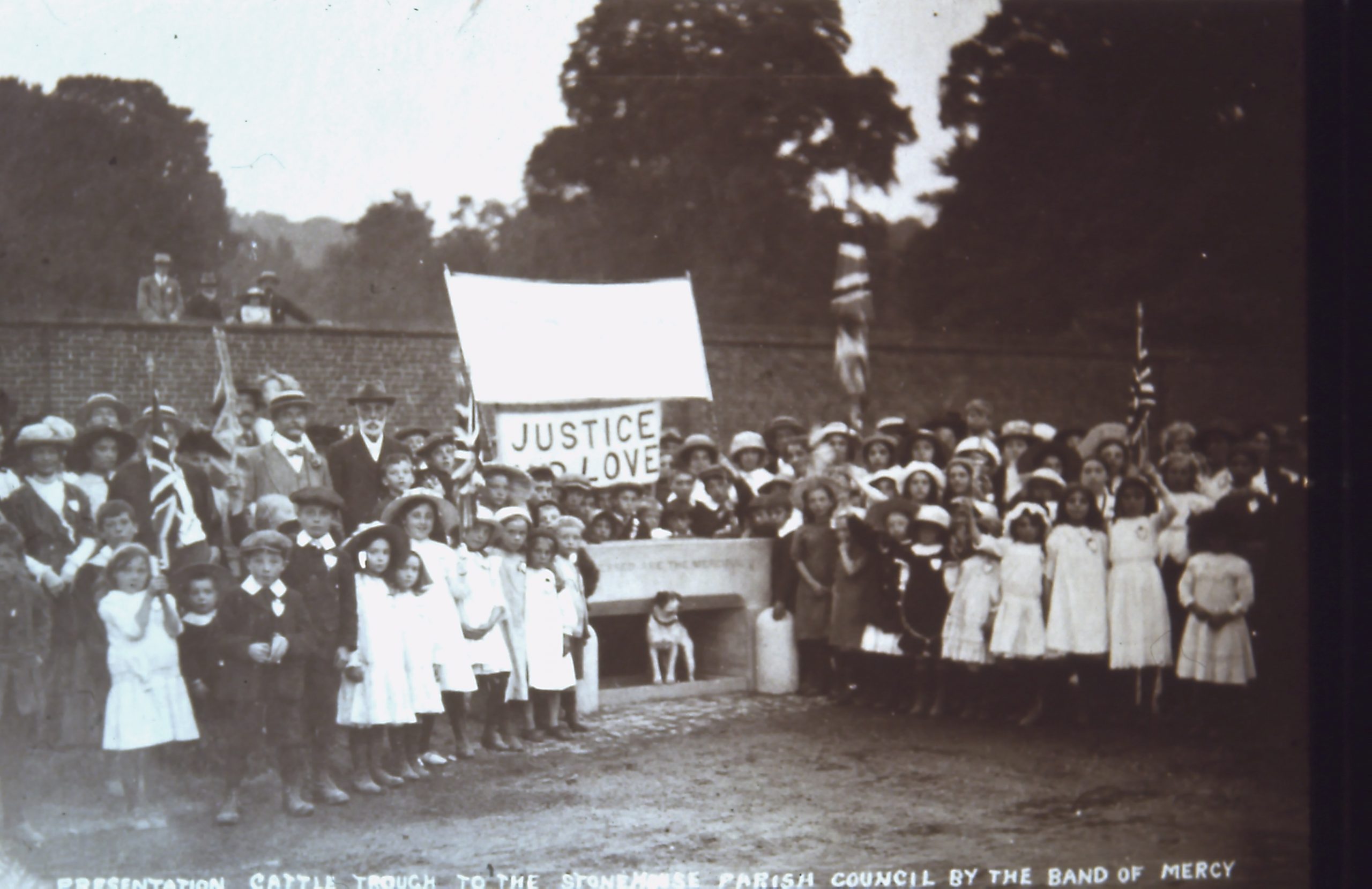
Presentation Cattle Trough to the Stonehouse Parish Council by the Band of Mercy (1914)
If you are out for a walk take a moment to read the inscriptions. The one on the front reads: “The gift of the Stonehouse Band of Mercy with the help of many kind friends. 1914.” The Biblical text “Blessed are the merciful.” is on the back.
On the end nearest to Bristol Road, the supplier’s details are almost indiscernible, worn and covered by lichen, but can still be read: “Metropolitan Fountain and Cattle Trough Association.” The Metropolitan Free Drinking Fountain Association, which is still in existence today, was founded in 1859 by Samuel Gurney MP, at a time when clean drinking water was difficult to obtain. Free drinking water gave an alternative to beer for poor people and contributed greatly to the well-being of animals. It changed its name to include cattle troughs in 1867.
“A.R. Blick & Son, Stonehouse” (the former local building firm) is also recorded. Blicks may well have installed the Trough and carved the inscriptions.
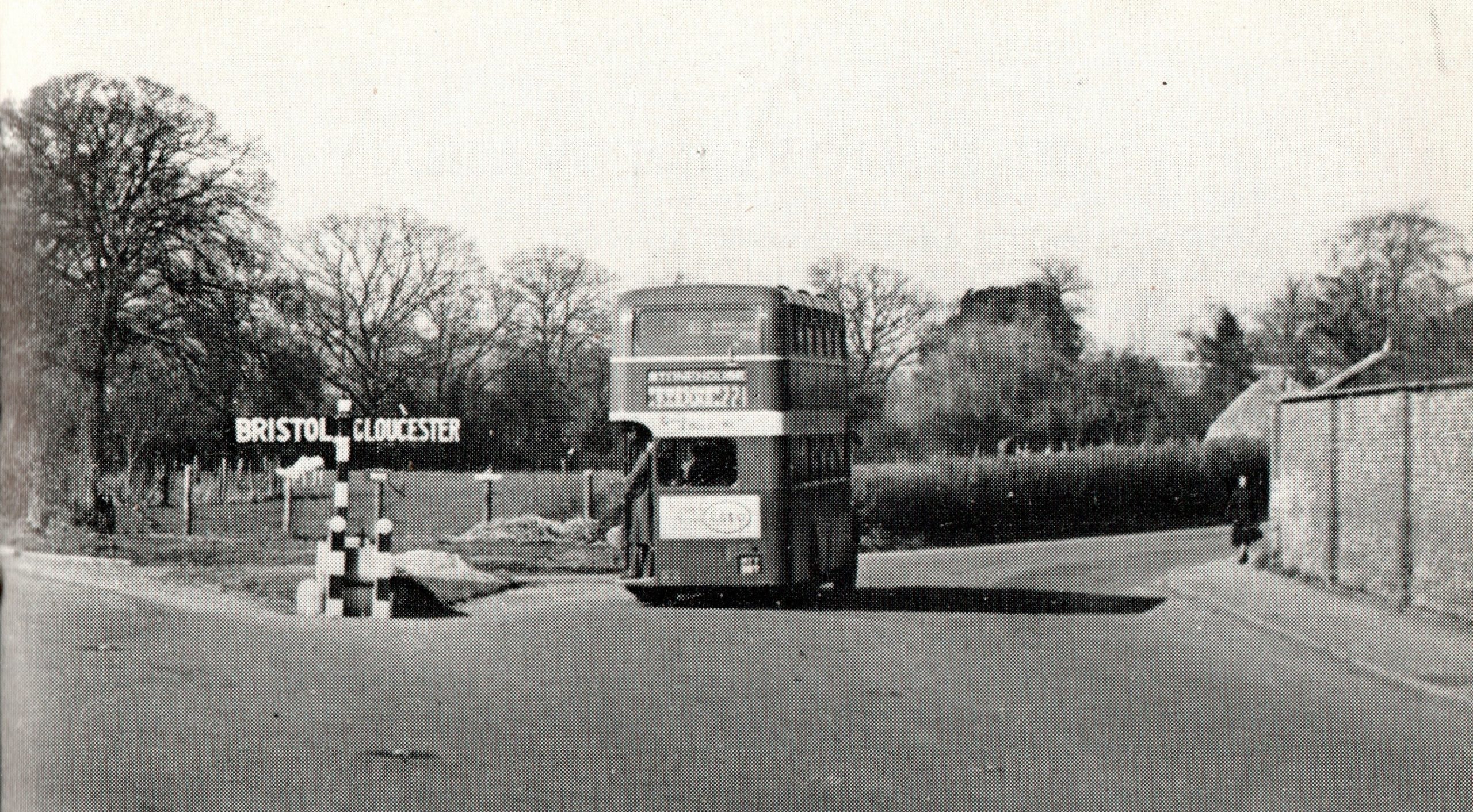
The road from Ryeford to Stonehouse where the Horse Trough roundabout was later built. The trough is out of view on the right by the brick wall. It was moved across the road c1994 to the edge of Wycliffe playing field (left of bus in photo).
Blackwell’s Builders placed the trough on its present site, when an unknown person placed their footprints in the surrounding concrete before it was dry. Does anyone know who the culprit was?
By Stonehouse History Group with thanks to Carol Powell.